
Your Brain Thinks Uncertainty Will Kill You. It Won't.
How to survive the things you cannot fix, change or outrun.

Jesus, things feel hard right now. Not only because of all that’s happening in the country and the world but also because of the uncertainty about what is coming next.
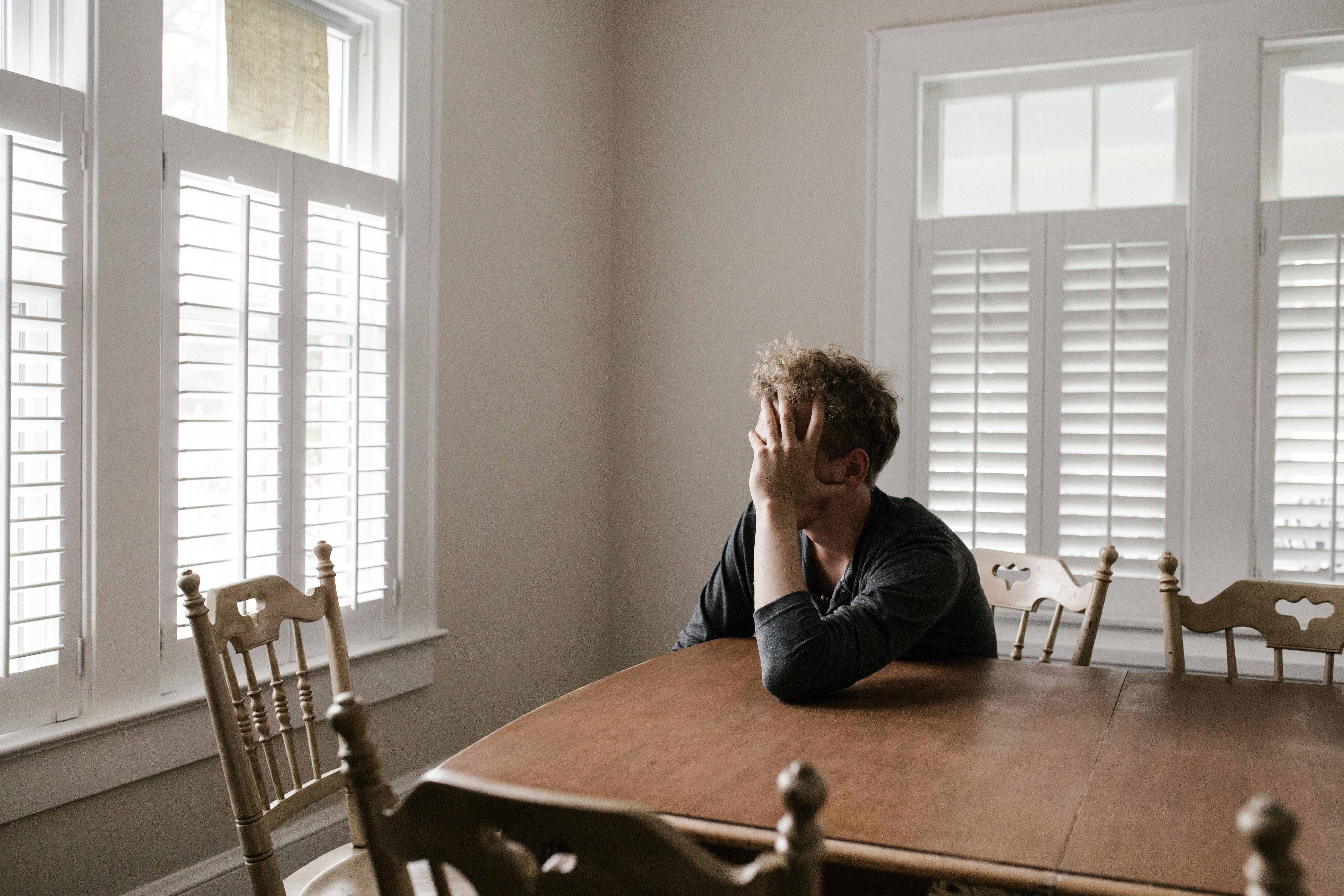
In my work as a therapist and a social worker, I’m seeing a lot of people who are struggling to cope. Some of that is due to underlying mental illness, but a lot of it is just life, chipping away at our distress tolerance, our ability to manage feelings of stress, fear and anxiety. And who could blame us? Food and gas prices are high, we’re involved in a war most of us don’t want, the president is cursing out the Pope, we fear job loss and feel the economic uncertainties of the moment…. not to mention smaller everyday irritants that eat away at our well-being, like long waits at the DMV, constantly deleting spam political texts or being stuck on hold while trying to cancel a subscription. (A new study even quantifies the cost of “the steady grind of small hassles” at $165 billion a year in lost time and money).
Distress tolerance is not the same thing as, say, stoicism or resilience. It’s essentially the capacity to accept and tolerate discomfort without running away from it. This isn’t a capacity you’re born with; it’s a resource, one you build over time but one that can also be depleted.
Running away from distress and discomfort isn’t necessarily literal running (though it could be…) but more about maladaptive coping, like drinking or drugging, emotional numbing, social withdrawal and isolation. It could also look like hiding under a weighted blanket with a cup of tea while you scroll photos of babies and puppies.
Closely related to distress tolerance is our ability to tolerate uncertainty. Human beings don’t like uncertainty; it makes us anxious because it signals potential danger to our limbic system, which is the part of the brain associated with emotions and survival. What is unknown cannot be prepared for or defended against. So uncertainty = danger = modern day anxiety and stress. The “not knowing” seems to activate our neural alarm system. Something bad is coming. Or is already here.
In fact, what’s known as “IU”—intolerance of uncertainty—paired with fatigue (and who among us doesn’t feel exhausted by the news?) has been shown to negatively affect decision making.
Although the Buddhists tell us to sit with discomfort, it’s not easy. But it’s certainly possible. One thing I often tell clients who are making all sorts of poor decisions in an effort to avoid discomfort is to have them ask one question before they do anything: “How will this serve me?” If calling the old boyfriend or drinking the vodka will, actually, serve them, then okay. Call. Drink. But more often than not, the answer is no, it won’t serve me. And that’s when you have to move toward acceptance.
Dialectical Behavior Therapy or DBT, has a lot to teach us about this kind of acceptance. DBT teaches patients how to regulate their emotions and soothe themselves, keeping in mind that being able to tolerate distress isn’t the same thing as feeling better.
If you’re feeling distress because of events that are outside of your control, you’re not going to be able to change things to make yourself feel better. With DBT, you just don’t make things worse.
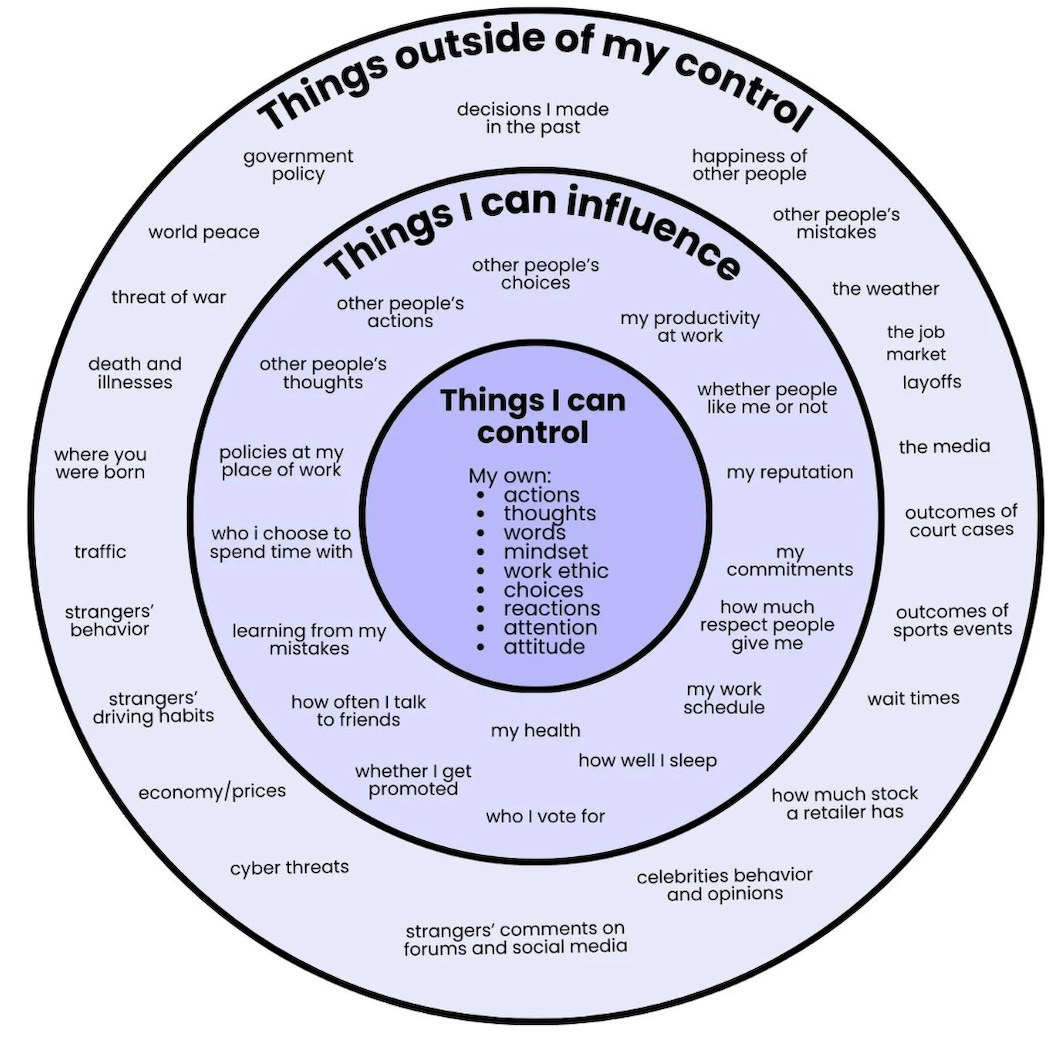
It’s natural to want to escape psychic discomfort but if you can interrupt that drive and work instead toward acceptance, you will eventually feel less stressed. Acceptance may sound ridiculous-- for instance, if you can’t afford to fill your car with gas or you’re worried about losing your job, how do you just accept that?
Determine if the thing you’re worried about, whatever it is that’s causing you stress and anxiety, is something you can control or change. If the answer is no then your options are, for the most part, distress or acceptance. And for me at least, the more I work to accept what I cannot change (yes, that sounds just like the Serenity Prayer people say at AA meetings….) the less distressed I feel.
Marsha Linehan, a professor emeritus of psychology at the University of Washington is the developer of DBT, originally used for suicidal behaviors but since expanded to treat a variety of mental health issues associated with serious emotional dysregulation. Linehan is credited with telling a story that illustrates the crux of DBT. It’s usually referred to as The Dandelion Story, and is taken from her skills manual for DBT (although I’ve read she originally found it in Anthony De Mello’s The Song of the Bird).
It’s about a man who buys a new house and wants a beautiful lawn. He does everything the gardening books and folks at the local gardening shop tell him to do to keep it green but, of course, he gets dandelions. He buys weed killer and this works for a while, but they come back. He tries to plant a different kind of grass but after a while, the dandelions return. A friend tells him the seeds are coming from dandelions in his neighbors’ lawns, so he convinces all the neighbors to kill their dandelions. And yet…. his lawn still has the weed. So, he writes the U.S. Agriculture Department and asks for advice. They are the experts, he thinks, surely they’ll know what to do. They write him back: “After careful consideration…. Our advice is that you learn to love the dandelions.”
Radical acceptance, essentially, something Linehan has defined as “complete and total openness to the facts of reality as they are, without throwing a tantrum and growing angry.”
That may seem like a tall order these days, and it is. But as psychoanalyst Carl Jung is often quoted as saying, “What you resist, persists.”
So very helpful for the times we're in. Thank you, friend. 🌷
Radical acceptance is a wonderful thing